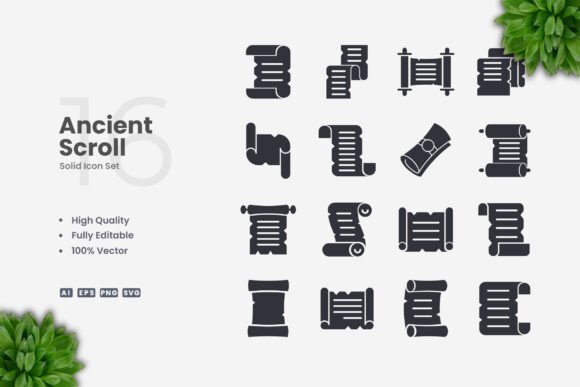
Ancient Scroll Solid Icons: Graphics for Editorial Icons
As a digital publisher who has spent years refining the visual identity of multiple content websites, I approach every new graphic design asset with a specific set of criteria. It is not just about whether an image looks good in isolation; it is about how it functions within a live editorial environment. When I first encountered the Ancient Scroll Solid Icons collection, my immediate reaction was one of intrigue regarding its potential for storytelling. In an era where flat, generic vector art often dominates the web, these icons offer a distinct texture and historical weight that can significantly elevate editorial design.
The first impression of this collection is that it strikes a balance between decorative charm and functional clarity. The "ancient scroll" motif naturally evokes feelings of history, wisdom, documentation, and timelessness. For a blogger or content creator, this mood is invaluable. It suggests that the content behind the icon is well-researched, archival, or perhaps part of a curated guide. Unlike overly playful or strictly corporate assets, these Icons feel educational yet artistic. They are perfect for niches such as history blogs, literary reviews, travel journals focusing on heritage sites, or even legal and financial advice columns that wish to project an air of established authority.
Integrating Historical Aesthetics into Modern Web Design
The true test of any design asset is its versatility across a publishing workflow. I immediately began envisioning how the Ancient Scroll Solid Icons could be deployed across various touchpoints of a content strategy. For blog graphics, these icons serve as excellent category thumbnails. Imagine a history blog using a scroll icon to denote "Archives" or a lifestyle site using it for "Journal Entries." The solid style ensures they remain legible even when scaled down for mobile navigation menus or sidebar widgets.
Beyond standard website integration, these Graphics shine in the realm of social media and lead generation. For Pinterest pin creation, the scroll motif provides a strong focal point that breaks up text-heavy layouts. If you are creating a digital guide or a checklist, placing one of these icons next to a headline like "The Ultimate History of Coffee" instantly communicates the theme before the user reads a single word. This contributes to a stronger visual hierarchy, guiding the reader's eye exactly where you want it to go.
Furthermore, for those of us creating downloadable resources, these icons are a goldmine. Whether you are designing a printable design for a worksheet, a cover for an eBook, or a header for a newsletter, the ability to edit these vectors is crucial. The description notes that you can easily resize or change colors, which is essential for maintaining brand identity. I tested changing the default color to a deep sepia tone to match a vintage-themed Canva template, and the result was seamless. This flexibility allows the asset to morph from a bold accent in a hero image to a subtle watermark in a digital product.
Boosting Click-Through Rates and Reader Trust
In content marketing and affiliate marketing, trust is currency. A polished, consistent visual presentation signals professionalism. Using high-quality design assets like the Ancient Scroll Solid Icons helps avoid the "amateur" look that often plagues new blogs. When a reader sees a cohesive set of custom-styled icons rather than mismatched clipart, their perception of the content's quality rises. This psychological boost can lead to better engagement metrics, longer time-on-page, and ultimately, higher conversion rates for affiliate links or email signups.
The "simple and clean" nature of the design ensures that these icons do not compete with your headlines. Instead, they support the message. For instance, in a website header promoting a new course on ancient civilizations, the scroll icon acts as a visual anchor. It reinforces the topic without cluttering the modern design aesthetic that users expect today. This balance is difficult to achieve, but this collection manages it by keeping the lines crisp while retaining the thematic essence of the scroll.
Strategic Placement and Performance Considerations
While these icons are powerful, strategic placement is key to maximizing their impact. They work exceptionally well in hero images, article thumbnails, and as editorial accents within long-form content. They are also ideal for social media graphics where brand recognition is vital. However, caution is advised when using them in extremely small mobile thumbnails where fine details might get lost, or on busy, textured backgrounds where the solid shape might not provide enough contrast. Additionally, for very serious corporate niches like high-frequency trading or emergency medical services, the historical whimsy of a scroll might feel out of place unless used ironically or specifically for a heritage angle.
From a technical standpoint, there are several practical notes for publishers. Before deploying these on a live site, always test them on both desktop and mobile screens. Check how the solid fill interacts with your specific typography; they pair beautifully with serif fonts for a classic look but can also create an interesting juxtaposition with bold sans-serif or handwritten display fonts. Since web performance is critical for SEO, ensure you export the final files in the correct format and compress images properly without losing the crispness of the vector edges.
Finally, always confirm the licensing terms. As a professional publisher, I never assume an asset is free for commercial use without verification. Ensure you have the appropriate commercial license before using these icons on monetized websites, in paid digital downloads, or within client projects. Sourcing from a reputable creative marketplace usually guarantees this, but due diligence is part of the job.
In conclusion, the Ancient Scroll Solid Icons represent a versatile tool for the modern publisher. They bridge the gap between decorative art and functional UI elements, offering a way to inject personality and narrative depth into small business branding and large-scale content networks alike. By leveraging their editable nature and timeless appeal, you can create a more engaging, trustworthy, and visually distinct online presence.