Review: Electrical Pylon Color Icons for Embroidery
As a designer who spends more time staring at stitch maps than most people care to admit, I approach new design assets with a healthy dose of skepticism. We often see graphics marketed as "perfect for everything," from websites to print, but translating a vector concept into a tangible machine embroidery design is a completely different beast. Recently, I got my hands on the Electrical Pylon Color Icons set to evaluate its potential for real-world crafting and commercial use. While the product description highlights its utility for digital media like infographics and mobile apps, my job was to determine if these clean lines could survive the needle and thread without losing their charm.
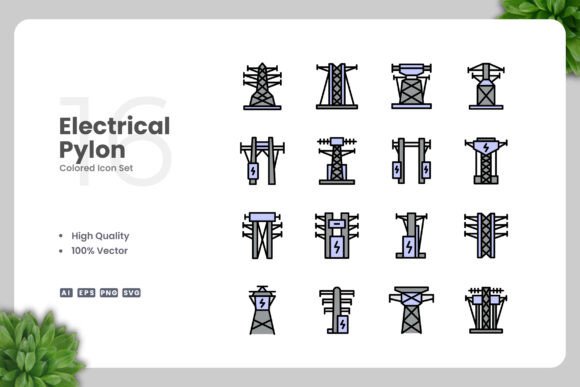
My first impression of the Electrical Pylon Color Icons was one of structural simplicity. The mood is industrial yet approachable, relying on strong geometric shapes rather than intricate shading. For an embroiderer, this is often a good sign. Complex gradients that look stunning on a screen can turn into a muddy mess of thread breaks and excessive trims on fabric. These icons, however, lean into a flat, graphic style that translates remarkably well to stitching. The visual personality suggests reliability and energy, making it a natural fit for projects that need a modern, utilitarian aesthetic without feeling cold or overly technical.
Putting the Design to the Test: A Real-World Scenario
To truly gauge the value of these Graphics, I decided to move beyond digital mockups and simulate a real client order. Imagine a local eco-conscious brand launching a line of heavy canvas tote bags and workwear aprons. They wanted a logo that represented sustainable energy distribution. The Electrical Pylon Color Icons seemed like the perfect candidate. I selected a design from the set and prepared to digitize it for a sweatshirt embroidery project as well, aiming to create a cohesive look across different textures.
The process began with analyzing the source file. Since the description notes that you can easily edit colors and resize using vector software, I imported the file to simplify the shapes for stitching. The clean layout meant I didn't have to fight against unnecessary details. When I ran the test stitch-out on a medium-weight cotton twill, the result was crisp. The pylon structure held its shape beautifully, proving that simple designs often yield the highest quality finished product. Customers reacting to the sample loved the clarity; it looked professional, not like a home-hobbyist experiment. This kind of recognition is crucial for building trust in a craft business.
Versatility Across Fabrics and Products
One of the strongest aspects of the Electrical Pylon Color Icons is their adaptability. Because the design relies on bold forms rather than fine hairlines, it performs well across a variety of substrates. I can easily envision these working as a central motif on a tote bag design, where the larger hoop size allows the geometry to breathe. Similarly, for baby embroidery on a onesie or bib, scaling the icon down retains its recognizability, provided the stitch density is adjusted correctly.
For Etsy sellers and boutique owners, these icons offer a unique niche. While floral and animal motifs saturate the market, industrial and infrastructure themes are rarer. Using these icons for holiday embroidery gifts—perhaps for an engineer parent or a science enthusiast—adds a personalized touch that feels thoughtful and specific. They also work exceptionally well for creating custom embroidered patches. The defined edges make it easy to create a merrowed border or a clean cut-edge finish, adding significant perceived value to the item.
However, versatility does not mean universality. There are specific scenarios where caution is required. If you are attempting to stitch these onto highly textured fabrics like thick wool blankets or looped towels, the finer connection points of the pylon structure might get lost. Similarly, on stretchy knits used for custom apparel, improper stabilization can cause the straight lines of the pylon to warp or pucker over time. For dark fabrics, you must carefully select your thread colors to ensure sufficient contrast; a dark grey thread on a black hoodie will render the icon invisible, defeating the purpose of the design.
Technical Considerations for the Stitcher
Before committing to a full production run, there are several practical steps every designer should take with the Electrical Pylon Color Icons. First and foremost, always test the design on scrap fabric that matches your final material. This allows you to check the stitch density. If the original vector is converted directly to a fill stitch without adjustment, it might become too dense, causing the fabric to stiffen or the needle to break. Converting key structural lines to a satin stitch or even a running stitch can maintain the graphic look while improving drape and flexibility.
Hoop size is another critical factor. While these icons are scalable, placing them on curved surfaces like caps requires a smaller hoop and careful positioning to avoid distortion. The pointed top of the pylon needs enough space to stitch out cleanly without hitting the hoop frame. Additionally, if you are using these for items that require frequent washing, such as kitchen towels or aprons, consider underlay strategies. A proper stabilizer is non-negotiable here to prevent the design from shifting or fraying after multiple cycles.
It is also wise to view your design in black and white before stitching. This helps identify if the contrast between different sections of the pylon is strong enough to be read clearly without color reliance. This is particularly important for printable mockup previews you might show clients before the actual stitching begins. A design that looks great in color but disappears in grayscale might need tweaking to ensure maximum impact.
Final Verdict on Commercial Viability
In the world of commercial embroidery, consistency and professionalism are king. The Electrical Pylon Color Icons deliver a level of polish that enhances brand presentation. They are not just decorative; they communicate a specific theme effectively. For small shop products, this kind of clear communication drives buyer engagement. A customer scrolling through an online store is more likely to stop on a product with a sharp, recognizable icon than one with a blurry or overly complex image.
That said, remember that the source files are described as vector graphics intended for editing. This means you are responsible for the digitization process or ensuring the purchased package includes ready-to-stitch embroidery files. Do not assume the vector file is automatically a stitch file. You must confirm licensing terms before selling finished items or digital derivatives. If the license permits commercial use, these icons are a goldmine for creating a cohesive collection of energy-themed goods.
Ultimately, the Electrical Pylon Color Icons are a solid addition to a designer's library. They bridge the gap between digital utility and tactile craft. Whether you are making a personalized gift for a friend working in the power industry or stocking your Etsy shop with unique industrial-chic decor, these graphics provide a strong foundation. With the right attention to thread selection, stabilizer choice, and fabric compatibility, they transform from simple lines on a screen into durable, high-quality embroidered art.