Sustainable Energy Icons: A Designer's Review for Embroidery
As a designer who spends more time staring at stitch simulations than I do sleeping, I am always skeptical when I see a product titled Sustainable Energy Icons described primarily for websites and mobile apps. My first instinct is to ask: "Will this translate to thread?" Digital graphics are forgiving; you can resize a vector infinitely, change a stroke weight with a click, and ignore fabric texture entirely. Embroidery, however, is unforgiving. It demands respect for the medium. When I pulled up these files to evaluate them for a real-world embroidery project, I wasn't looking for pretty pixels. I was looking for clean paths, logical color stops, and a layout that wouldn't turn into a bird's nest of thread on my machine.
The First Impression: Clean Lines vs. Stitch Reality
The initial visual impact of the Sustainable Energy Icons is undeniably strong. The mood is modern, optimistic, and minimalist. For a digital graphic, this is perfect. But for us Etsy sellers and apparel decorators, "simple and clean" can be a double-edged sword. In embroidery, simplicity often means relying heavily on running stitch or thin satin stitch columns. If the lines in the source file are too delicate, they vanish into the weave of the fabric. If they are too dense, they pucker the material.
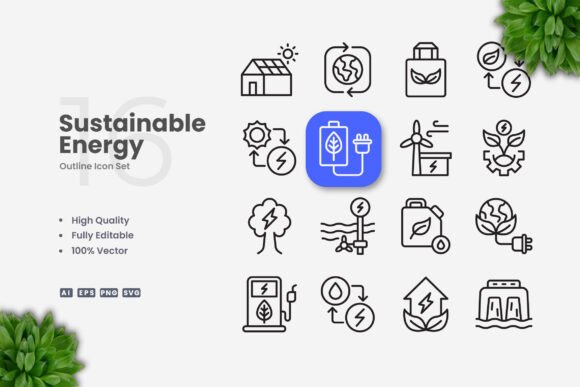
Upon closer inspection of the design elements—solar panels, wind turbines, and leaf motifs—the shapes appear geometric and bold. This is a good sign. Geometric shapes generally digitize well because they avoid the organic unpredictability of freehand drawing. However, because the product description mentions the ability to "resize, change color, or edit stroke weight," it implies these might be vector-based assets rather than pre-digitized embroidery files. This is a crucial distinction. If you are buying this as a digital embroidery file ready to stitch, you need to verify the stitch count and density immediately. If you are buying the graphic to digitize yourself, you have the freedom to adjust the stitch density to suit your specific hoop size and fabric choice.
Real-World Application: The Eco-Tote Scenario
To truly test the viability of these icons, I imagined a specific client request: a local co-op needed branded tote bags for an Earth Day event. They wanted a small shop product feel, something that looked professional but handmade. I selected the solar panel icon from the Sustainable Energy Icons set for this tote bag design.
Tote bags are usually made of canvas or heavy cotton twill. These fabrics have a distinct fabric texture that can swallow fine details. The clean lines of the energy icons worked surprisingly well here. By using a thicker satin stitch border and a light fill stitch for the interior, the design popped against the natural beige background. The result was a crisp, recognizable symbol that communicated the brand's values instantly. Customers at the craft fair were drawn to the clarity of the image. It didn't look like a messy homemade attempt; it looked like a finished product from a boutique.
I also considered applying these to a sweatshirt embroidery project. Fleece and French terry are tricky; they stretch and have loops that can interfere with small details. The larger icons in the set performed beautifully on a navy blue hoodie, creating a striking contrast with bright yellow or green thread colors. However, the smaller icons required careful placement. On a curved surface like a sleeve or a cap, tiny details can get lost. For a custom apparel line targeting eco-conscious consumers, sticking to the medium-to-large icons in this collection ensures the message remains clear after multiple washes.
Navigating Fabric Challenges and Limitations
While the Sustainable Energy Icons are versatile, they are not magic. There are scenarios where you must proceed with caution. If you plan to use these on thin, stretchy fabrics like jersey knit for baby embroidery, you must be vigilant. A design with long spans of running stitch can cause the fabric to gather and pucker if not properly stabilized. Always use a high-quality cut-away stabilizer for stretchy garments to maintain the integrity of the shape over time.
Dark fabrics present another challenge. Since these icons rely on clean outlines, ensuring your thread colors have enough contrast is vital. A dark green wind turbine on a black jacket will disappear. You may need to add a white underlay or choose a brighter thread shade to make the handmade product stand out. Additionally, be wary of "tiny lettering" if the icons include any text elements. In embroidery, anything smaller than 0.25 inches often becomes illegible. If the source graphic allows you to edit stroke weight, thicken those lines before sending the file to your machine.
Enhancing Brand Value and Customer Trust
For craft business owners, the quality of your design assets directly impacts your brand consistency. Using a cohesive set like Sustainable Energy Icons across different products—patches, aprons, pillow covers—creates a professional visual language. When a customer sees a matching icon on a kitchen towel and a holiday gift tag, it builds trust. It signals that you pay attention to detail and care about the aesthetic of your small shop product.
These icons also excel in creating printable mockups for your online listings. Before you even stitch a single thread, you can place these graphics on photos of blank garments to show potential buyers what the final item could look like. This helps manage expectations and increases buyer engagement. A clear, professional mockup combined with the promise of a high-quality stitched result can significantly boost conversion rates for an Etsy seller.
Practical Notes for the Studio
Before you commit to a production run, here is my advice for working with this specific collection:
- Test on Scrap First: Never skip the test stitch. Run the design on a scrap piece of the actual fabric you intend to use. Check how the stitch density interacts with the weave.
- Check Licensing: The description mentions use for websites and print, but always confirm the license terms for commercial embroidery. Can you sell the stitched items? Can you sell the digitized files? Clarify this before listing items in your shop.
- Verify File Formats: Ensure the download includes the specific machine formats you need (PES, DST, EXP, etc.). If it only provides SVG or AI files, remember that you will need to digitize them yourself or hire a digitizer.
- Contrast is Key: Test the design in black and white mockups first. If it doesn't read clearly in grayscale, it might struggle with thread contrast on certain fabrics.
- Hoop Size Matters: Confirm the maximum dimensions of the design fit within your available hoop size, especially if you are working with smaller hoops on caps or pockets.
In conclusion, the Sustainable Energy Icons offer a solid foundation for modern embroidery projects. Their clean aesthetic translates well to thread when handled with technical knowledge. Whether you are creating a personalized gift for a nature lover or building a line of embroidered patches for an environmental nonprofit, these graphics have the potential to elevate your work. Just remember: in our trade, the devil is in the details, and the success of the finished product depends on how well you adapt the digital vision to the physical reality of needle and thread.